
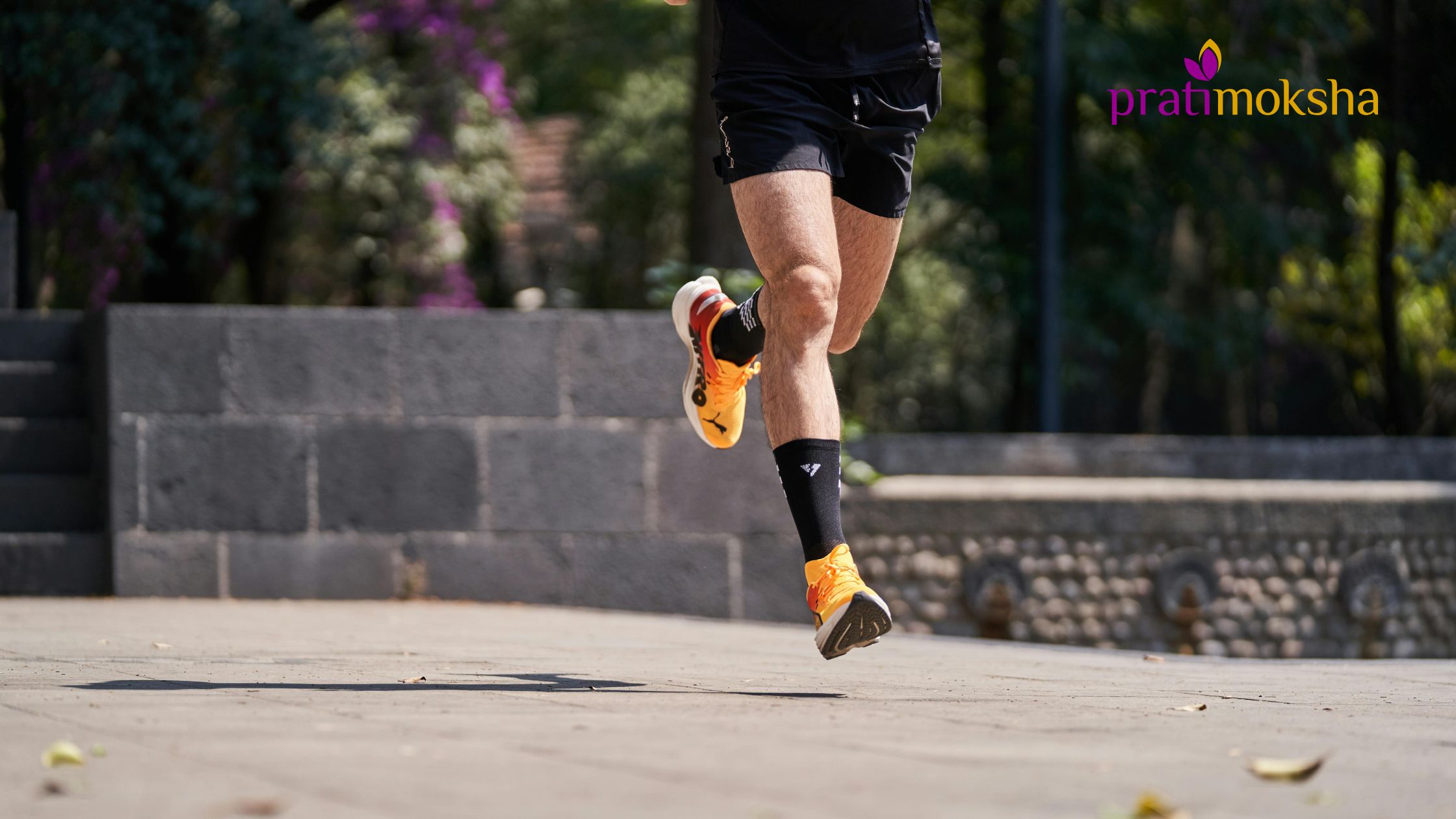
The second set of a Saturday padel match is where the trouble tends to start. The first set felt fine. Then a lunge for a low ball, a sharp pull in the calf or a twinge at the outer elbow, and a sport that was supposed to be the fun part of the week becomes a reason to see a physiotherapist.
Padel has spread fast across the UAE, and the injury research is catching up. A systematic review published in BMJ Open Sport & Exercise Medicine in 2023 pooled eight studies covering 2,022 players, whose average ages ranged from 31 to 57. It found about three injuries per 1,000 hours of training and eight per 1,000 matches. The elbow was the most common site, followed by the knee, the shoulder and the lower back, and most injuries involved tendons and muscles rather than bones. No equivalent figures exist yet for players in the UAE, but the courts here are full of people in exactly that age band.
The same pattern runs through weekend football, cycling on the Al Qudra track and the running clubs that meet along the beaches before work. People in Dubai play hard, in heat for much of the year, and usually after a week spent mostly sitting. The body that turns up on Saturday is a different body from the one that played the same sport at twenty-five.
What changes after forty
Nothing dramatic happens on a fortieth birthday. Several slow changes add up instead. Tendons become stiffer and recover from heavy load more slowly. Muscle mass declines gradually from the thirties onward unless it is trained. Joint cartilage handles sudden impact less forgivingly. And for most people, the gap between how active they are on the weekend and how active they are on a Tuesday afternoon grows wider every year.
That gap is the real risk. A body that sits for five days and sprints for ninety minutes on the sixth is being asked to do something it has not rehearsed. The tissues that pay for it are the ones the padel review found: the tendons around the elbow, the knee and the calf, and the lower back that has to absorb every twist.
Dubai’s heat adds its own load. Matches played in the warmer months cost more fluid and more effort from the heart, and a tired body is a less careful one. Water, a cooler time slot and honest rest between sets do more for injury prevention than most people expect.
Where yoga fits in an athlete’s week
Yoga is no substitute for sport-specific training. It does several things that weekend athletes tend to skip entirely:
- It loads tendons slowly and with control, in long holds and lowering movements, which is the kind of loading that helps tendons tolerate faster work
- It builds strength at the end of a joint’s range, where many strains happen, instead of only in the comfortable middle
- It trains balance and the small stabilizing muscles around the ankle, knee and hip, which steady the body when a foot lands badly
- It restores rotation through the upper back, so the shoulder and the lower back stop doing the twisting the spine should share
- It brings the breath under control, which shortens recovery between hard efforts and calms the body after the match
The classical texts were not written for padel players, but the principle of sthira and sukha, steady and at ease, fits sport surprisingly well. An athlete who can be strong and relaxed at the same time moves more efficiently and breaks down less.
For padel and tennis players in particular, the forearm and grip need attention. Gentle wrist and forearm work, done slowly with the breath, prepares the tendons around the elbow for the repetitive load of the racket.
Two sessions that make the difference
For most weekend athletes over forty, two yoga sessions a week are enough to change how the body handles sport. One sits midweek, as strength and mobility work: slow standing poses, lunges held at depth, balance on one leg, supported backbends to open the front of the hips and chest. The other comes the day after sport, as recovery: gentle twists, long exhales, legs up the wall, and nothing that demands more effort. Two moderate sessions every week for a year will do more for a forty-five-year-old knee than an intense month followed by nothing.
Before the game itself, ten minutes of dynamic warm-up does more than any amount of static stretching on the court. Leg swings, walking lunges, arm circles that grow larger, a few gentle rotations through the trunk. The aim is to raise the body’s temperature and wake the joints. Touching the toes can wait.
Reading the body like a clinician
Lalitha Viswanath, who founded the studio, brings a manual osteopath’s training to more than 20 years of teaching in Dubai, and it changes how sports injuries are handled in class. An elbow that flares after padel is looked at alongside the grip, the shoulder and the upper back. A recurring calf strain is checked against the ankle’s range and the way the hip controls the leg. Treating only the place that hurts usually means treating it again in six months.
The same thinking applies to stiffness that has not yet become an injury: a hip that no longer rotates fully, a shoulder that complains when reaching overhead. Those are early signals, and they are much easier to work with than a torn tendon.
For an existing injury, the musculoskeletal therapy offered at the studio works alongside any medical or physiotherapy care already in place. For general conditioning, the Asana & Beyond program builds strength and control through classical postures over a longer arc.
Playing the long game
I think the players still on court at sixty are rarely the ones who were most talented at thirty. They are the ones who looked after the unglamorous parts: the warm-up, the mid-week strength work, the rest day that stayed a rest day. None of it makes for a good story, which is exactly why so few people keep it up. Long-term sustainability over short-term results sounds like a yoga principle, and it is, but it is also the only strategy that keeps a sport in a person’s life.
Weekend athletes in Dubai who want to keep playing for the next twenty years can start by booking a trial session at the Oud Metha studio on a non-match day, bringing the sport, the history of niggles and the match schedule, and finding out which part of their body has been quietly paying for Saturday.




0 Comments